DAO Enzyme Side Effects: 7 Things to Know Before You Buy
You have been reading about DAO supplements for histamine intolerance. The concept makes sense — replace the enzyme your body is not producing enough of, and your symptoms should improve. But before you add anything to your routine, you want to know: are there side effects?
It is a smart question. And the honest answer is: yes, some people do report side effects from DAO supplements. But here is what most articles leave out — the vast majority of those side effects have nothing to do with the DAO enzyme itself.
They come from how the supplement was formulated. The capsule design. The filler ingredients. The dosage. The quality controls — or lack of them.
This article breaks down the seven most commonly reported issues, explains why each one happens, and tells you exactly what to look for so you can avoid them.
What Is DAO (and Why Do People Take It)?
Diamine oxidase (DAO) is a digestive enzyme your body naturally produces in the lining of the small intestine. Its job is to break down histamine from the food you eat — before it enters your bloodstream and triggers symptoms like headaches, flushing, bloating, and skin irritation.
When your body does not produce enough DAO, histamine from everyday foods builds up faster than you can clear it. That is histamine intolerance. DAO supplementation is designed to support your body's own histamine metabolism by providing additional enzyme before meals.
Is DAO Enzyme Safe?
Yes — DAO is a naturally occurring enzyme that your body already produces. It is not a drug. It is not blocking a receptor or altering your brain chemistry. It is supplementing a digestive function that is already supposed to be happening.
The side effects people report are almost always a product of the supplement's formulation, not the enzyme itself. A poorly designed capsule, an inadequate dose, cheap filler ingredients, or missing quality controls can all create problems that get incorrectly blamed on “DAO.”
Understanding the difference between the enzyme and the delivery vehicle is the key to choosing a supplement that actually works — without unwanted reactions.
7 Side Effects People Report With DAO Supplements
(and Why They Happen)

1. Stomach Upset or Nausea
Why it happens:
Most DAO supplements use standard capsules that dissolve in stomach acid. The problem? DAO enzyme is meant to work in the small intestine, not the stomach. When the capsule breaks down too early, the enzyme is released into an acidic environment where it does not belong — irritating the stomach lining and causing nausea or discomfort.
What to look for instead:
An acid-resistant capsule specifically designed to survive stomach acid intact and release the enzyme in the small intestine, where it actually does its job. This is not a luxury feature — it is a basic requirement for DAO to function properly.

2. Headaches That Persist Despite Supplementation
Why it happens:
Many DAO supplements on the market contain just 3,000 to 5,000 HDU (histamine-degrading units) per capsule. For someone with meaningful DAO deficiency, that is like trying to mop a flooded kitchen with a paper towel. The dose is simply too low to make a noticeable difference — so symptoms persist, and people conclude “DAO doesn’t work for me.”
What to look for instead:
A minimum of 10,000 HDU per capsule. Research on DAO supplementation has typically used doses in the range of 10,000 to 20,000 HDU per serving. Look for 20,000 HDU — enough to meaningfully support histamine breakdown in a standard meal.
3. Allergic Reactions or Skin Irritation
Why it happens:
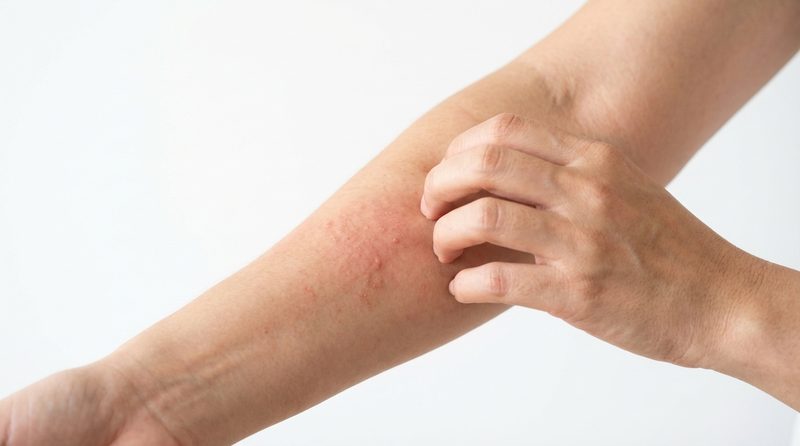
You would think a supplement designed for people with histamine sensitivities would keep its ingredient list clean. Many do not. Cheap DAO formulations are packed with fillers, binders, flow agents, and artificial additives — maltodextrin, artificial colors, and unnecessary excipients. For someone whose system is already reactive, these ingredients can trigger the very symptoms they are trying to avoid.
What to look for instead:
A short, transparent ingredient list with no artificial fillers, no proprietary blends, and no unnecessary additives. If the “other ingredients” section is longer than the active ingredient list, that is a red flag.

4. Bloating or Gas
Why it happens:
This is closely related to the filler problem. Ingredients like maltodextrin — a common cheap bulking agent — can ferment in the gut and produce gas, especially in people with sensitive digestive systems (which describes most people shopping for a DAO supplement in the first place). Poor capsule design that releases contents in the wrong location compounds the problem.
What to look for instead:
A formulation that contains the DAO enzyme and as little else as possible. No bulking agents. No fillers added to make the capsule look fuller or to reduce manufacturing costs. The capsule should deliver enzyme, not digestive irritants.
Want to skip the side effects entirely?
See How HistaDAO Solves These Issues →
5. No Effect at All (Wasted Money)
Why it happens:
This is the most common “side effect” — and the most frustrating. You spend $30 to $50 on a bottle, take it faithfully before meals, and nothing changes. The reason is usually straightforward: the enzyme was destroyed by stomach acid before it ever reached the small intestine. Without acid-resistant capsule technology, you may not be getting the benefit you paid for.
What to look for instead:
Confirmed acid-resistant delivery. This is the single most important factor in whether a DAO supplement will work or not. If the product label does not specifically mention acid-resistant or enteric-coated capsule technology, assume the enzyme is not surviving the trip.
6. Inconsistent Results — Works Sometimes, Not Others
Why it happens:
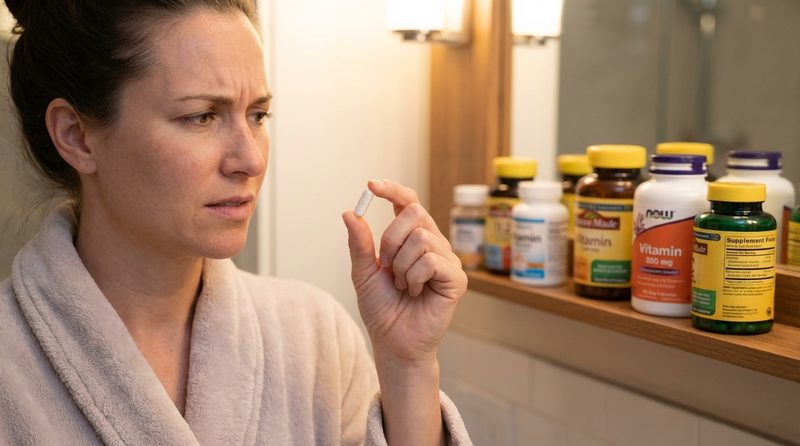
One week the supplement seems to help. The next week, nothing. This inconsistency is a hallmark of products manufactured without rigorous quality controls. If a supplement is not third-party tested for potency, the actual HDU count can vary significantly from capsule to capsule. Without GMP certification, there is no guarantee that what the label claims is what is inside the bottle.
What to look for instead:
Third-party testing for both purity and potency, plus manufacturing in a GMP-certified facility. These are not marketing buzzwords — they are the baseline standards that separate a reliable supplement from a gamble.

7. Reactions in People With Pork Sensitivities
Why it happens:
DAO enzyme supplements are derived from porcine (pig) kidney extract. This is currently the only commercially viable source that provides the enzyme at meaningful potency levels. Some products bury this fact deep in the fine print or omit it entirely. For people with pork sensitivities, religious dietary restrictions, or ethical concerns, discovering the source after the fact — sometimes after experiencing a reaction — is both a health issue and a trust issue.
What to look for instead:
Clear, upfront disclosure of the porcine origin on the product page and label. Transparency about sourcing is non-negotiable. If a company is not straightforward about what is in their product, what else are they not telling you?
What a Well-Formulated DAO Supplement Looks Like
Not all DAO supplements are created equal. Before you buy, check for these six things:
- High potency: At least 10,000 HDU per capsule — ideally 20,000 HDU — for meaningful histamine support
- Acid-resistant capsule delivery: The enzyme must survive stomach acid and reach the small intestine intact
- No unnecessary fillers or additives: A clean formulation with no artificial binders, bulking agents, or proprietary blends
- Third-party tested: Independent verification of both purity and potency — not just the manufacturer’s word
- GMP-certified manufacturing: Produced in a facility that meets Good Manufacturing Practice standards
- Clear source disclosure: Transparent about porcine (pig kidney) origin — no fine print, no surprises
If a product checks all six boxes, the risk of experiencing the side effects listed above drops significantly. If it does not, you are essentially hoping for the best.
A DAO Supplement Formulated to Avoid These Issues
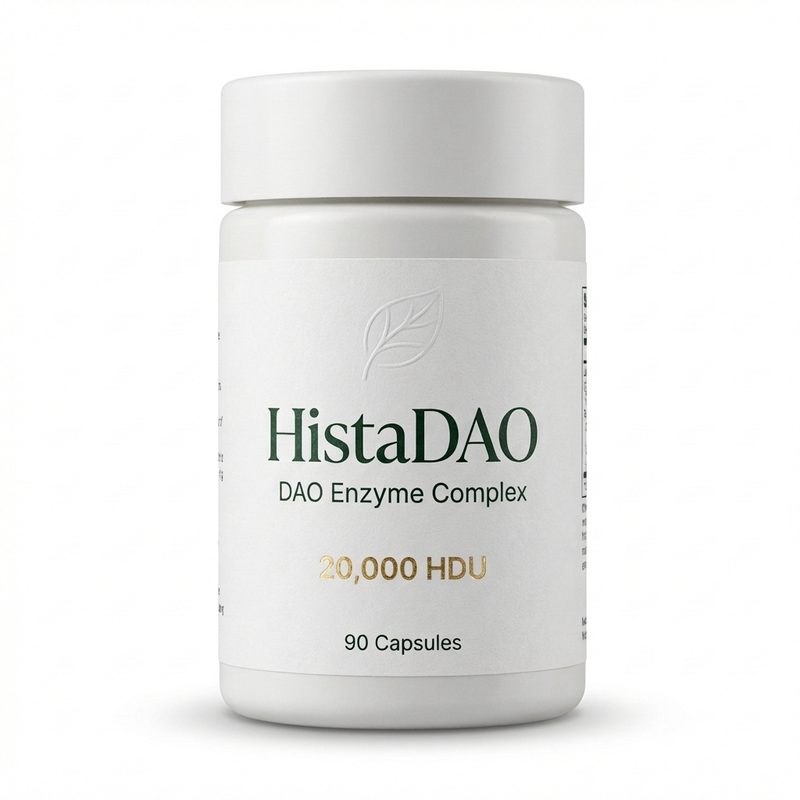
HistaDAO was developed specifically to address the formulation problems that cause most DAO supplement side effects.
Each capsule delivers 20,000 HDU of DAO enzyme — sourced from porcine kidney extract, the most widely studied source for high-potency diamine oxidase. The acid-resistant capsules are designed to protect the enzyme through the stomach and release it in the small intestine, where histamine breakdown actually occurs. The formulation contains no artificial fillers, no unnecessary additives, and no proprietary blends.
HistaDAO is manufactured in a GMP-certified facility in the United States and is third-party tested for both purity and potency. Each bottle contains 90 capsules — a 30-day supply at the recommended dose of one capsule before each meal.
No DAO supplement can guarantee zero side effects for every person. But HistaDAO was formulated to minimize the most common issues by getting the fundamentals right: high potency, proper delivery, clean ingredients, and verified quality.
Ready to try a DAO supplement that was built to work — not just to sell?
Join 1,200+ customers who chose HistaDAO for its formulation, potency, and transparency.
See HistaDAO Pricing & Availability →DAO supplementation is not appropriate for everyone. If you are pregnant, nursing, taking MAO inhibitors or other medications, or have a known sensitivity to porcine-derived products, consult your healthcare provider before use.
[1] Maintz L, Novak N. “Histamine and histamine intolerance.” American Journal of Clinical Nutrition, 2007;85(5):1185-1196.
[2] Izquierdo-Casas J et al. “Diamine oxidase (DAO) supplement reduces headache in episodic migraine patients with DAO deficiency: A randomized double-blind trial.” Clinical Nutrition, 2019;38(1):152-158.
[3] Comas-Basté O et al. “Histamine Intolerance: The Current State of the Art.” Biomolecules, 2020;10(8):1181.
[4] Manzotti G et al. “Serum diamine oxidase activity in patients with histamine intolerance.” International Journal of Immunopathology and Pharmacology, 2016;29(1):105-111.